

Betmgm casino Plinko game
Introduction
When I look at why Betmgm casino Plinko gets so much attention in Canada, the answer is not just that the format is easy to understand. It is that Plinko creates a very specific kind of tension. You drop a ball, watch it bounce through a field of pegs, and wait to see which multiplier it lands on. The interface looks almost simple enough to dismiss in a few seconds. In practice, the session can feel far more intense than many players expect.
That contrast is exactly why Plinko deserves a serious review. On the surface, it is one of the most accessible real money casino games: clear controls, fast rounds, visible risk settings, and no complicated paytable. But behind that clean presentation sits a structure built around probability distribution, variance, and pacing. The result is a format that can feel calm in one session and sharply aggressive in the next, depending on how the player sets it up.
In this article, I am focusing strictly on the game itself. I will explain what Plinko is, how the mechanics work, what the risk levels actually mean in real play, how the rhythm compares with slots and other casino games, and where the strong points and limitations become obvious. If you are considering trying Betmgm casino Plinko, this is what I believe matters before you start.
What Plinko is and why players keep coming back to it
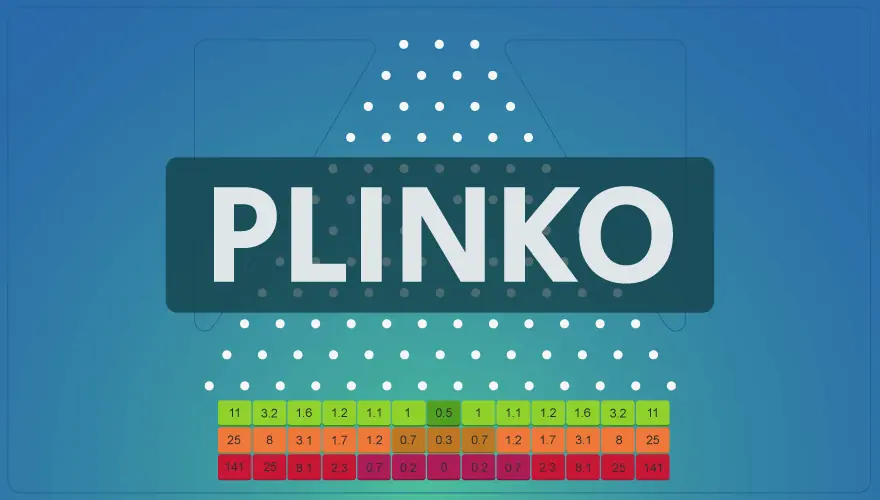
Plinko is a multiplier-based chance game built around a familiar visual idea: a ball drops from the top of the board, hits pegs on the way down, and eventually lands in one of several slots at the bottom. Each bottom slot carries a payout multiplier. Low multipliers usually sit near the center. Larger multipliers are usually placed toward the edges, where the ball reaches less often.
The reason this format became so noticeable is not only visual appeal. Plinko gives players immediate feedback. There is no reel set to interpret, no bonus round to wait for, and no dense rules page to decode. One drop produces one result. That clarity makes the game highly watchable and easy to follow even for someone who has never touched a slot.
What really holds attention, though, is the gap between what the eye sees and what the math delivers. The ball appears to wander freely, almost as if a near miss on one drop says something about the next. It does not. Each round is still governed by randomness and the game’s internal probability model. That creates one of the most interesting features of Plinko: it feels physical and intuitive, but the player still has to treat it like a probability-driven casino product, not like a skill challenge.
I would point to three reasons why the format stands out:
Instant readability. A new player understands the objective in seconds.
Visible tension. The path downward creates suspense in real time instead of revealing the result all at once.
Strong session control. Stake size, number of rows, and risk level can noticeably change the feel of play.
That last point matters more than it first appears. In many casino games, the player changes the bet but the core rhythm remains similar. In Plinko, changing the setup can significantly alter how often small returns appear, how long the bankroll lasts, and how realistic the chase for large multipliers actually is. A quick read of real money bonus code answers most questions about limits and account settings.
How the core mechanics of Plinko actually work
At its core, Plinko is a path-and-outcome system. You place a stake, release a ball, and the ball moves through rows of pegs. At each contact point, it effectively shifts left or right until it reaches the bottom. The final landing position determines the multiplier applied to your stake.
That sounds straightforward, but there are several variables that shape the experience:
Bet size affects the monetary value of every result.
Number of rows changes the depth of the board and usually the spread of outcomes.
Risk level changes how the multiplier distribution is weighted.
Auto-play or rapid drops can accelerate the session dramatically.
The most important thing to understand is that the board is not there just for decoration. The layout supports a probability pattern where center landings are more common and edge landings are rarer. This is why modest multipliers tend to appear more often, while the largest prizes sit in positions that the ball reaches less frequently.
In practical terms, Plinko often behaves like a bell-curve game with optional distortion through risk settings. On lower risk, the distribution is usually tighter: more common landings near the center, fewer dramatic spikes, and a steadier stream of middling outcomes. On higher risk, the distribution becomes harsher: many more low-end results and a much smaller chance of hitting the larger edge values.
One detail that many players underestimate is how much the number of rows can affect perception. A taller board gives the drop more visual drama and can make the result feel more earned, even though the player is still not influencing the path. More rows can also support a broader multiplier range, which often means a wider gap between ordinary results and rare high-end hits.
| Element | What it changes | What it means in practice |
|---|---|---|
| Stake | Cash value of each drop | Higher emotion per round, faster bankroll swings |
| Rows | Board depth and possible outcome spread | Can increase suspense and widen result range |
| Risk level | Distribution of multipliers | Low risk feels steadier, high risk feels sharper and less forgiving |
| Auto-play | Session speed | Convenient, but easy to lose track of spending pace |
Here is the key practical takeaway: the visible motion of the ball is part of the appeal, but the real engine of Plinko is distribution. The path is the drama. The probability table is the reality.
Why the session feels so engaging even though the rules are simple
Plinko has a session rhythm that is very different from what many players expect from such a minimal design. It does not rely on long build-up, story themes, or layered bonus systems. Instead, it creates engagement through repetition, anticipation, and contrast between common and rare outcomes.
The first reason it works is speed. A round resolves quickly, but not instantly. That short travel time from top to bottom is long enough to create suspense and short enough to keep the pace moving. It occupies a middle ground between an immediate number draw and a full slot spin with multiple visual stages.
The second reason is pattern illusion. This is one of the most memorable things about Plinko. After a series of center landings, many players begin to feel that an edge hit is “due.” After a rare high multiplier, some start to believe the board has turned cold. Neither conclusion is reliable. But the visual nature of the drop makes those impressions stronger than in many other formats.
I think this is one of the most distinctive observations about Plinko: it looks like a game of momentum even when it is behaving like a game of independent events. That mismatch is a major part of its pull.
The third reason is adjustable emotional intensity. A low-risk setup can feel almost methodical, with plenty of modest returns and fewer brutal swings. A high-risk setup can feel like a compressed volatility test, where long stretches of weak outcomes are suddenly interrupted by a result that changes the entire mood of the session. If bonuses are what you care about, Betmgm Casino crash games review before depositing real money breaks down every offer currently running.
From a player’s perspective, that means Plinko can serve two very different use cases:
Short, high-focus sessions for players who want sharp suspense and clear all-or-nothing tension.
Controlled, lower-intensity sessions for players who prefer frequent resolution without the complexity of slots.
That flexibility is a strength, but it also creates a trap. Because the interface looks harmless, some players underestimate how quickly repeated drops can add up. A game that resolves in seconds can burn through a balance faster than a slower format, especially when auto-play is active.
Understanding risk levels, probabilities, and real session outcomes
If there is one area where players need to be realistic before launching Plinko, it is this one. The game can display impressive top multipliers, but those numbers do not tell the whole story. What matters is how often the game reaches them, what happens between those hits, and how the selected risk profile reshapes the distribution of outcomes.
In most Plinko versions, low risk means a denser cluster of safer results. You are more likely to see small multipliers and less likely to experience extreme swings. This does not make the game safe in any absolute sense, but it usually makes the bankroll trajectory less violent. Those comparing loyalty perks can weigh this section against mobile access checklist.
Medium risk often acts as the compromise setting. It can still produce uneven sequences, but the balance between ordinary returns and occasional larger hits is usually less severe than on high risk. For many players, this is the setting that best reveals the actual character of the game without pushing it too far in either direction.
High risk is where the marketing appeal of Plinko often becomes strongest and the practical danger becomes most obvious. The top-end multipliers look attractive, but the path to them can involve many low-value outcomes or complete misses of meaningful return. A player who selects high risk should expect longer dry spells and stronger balance fluctuation.
| Risk setting | Typical feel | Likely player experience |
|---|---|---|
| Low | More stable, narrower spread | Frequent modest results, fewer dramatic moments |
| Medium | Balanced but still variable | Reasonable mix of routine outcomes and occasional spikes |
| High | Wide spread, harsher distribution | Long weak stretches with rare but much larger multipliers |
What should a player understand about probabilities? First, the biggest multiplier is not the “real” identity of the game. The full distribution is. Second, short-term results can be misleading in either direction. A strong early hit does not prove the setup is profitable. A cold opening does not mean the next drop is more likely to compensate. Third, volatility in Plinko is often felt more emotionally because every outcome is so easy to interpret. There is no ambiguity. You instantly know whether the drop was ordinary, disappointing, or exceptional.
Another observation that sets Plinko apart is this: the game can feel transparent while still being psychologically deceptive. You see the ball. You see the pegs. You see the slot it lands in. That visibility creates trust in the process, but it can also encourage false pattern reading. For disciplined players, that is manageable. For impulsive players, it can become expensive.
How Plinko differs from slots and other casino games
The easiest comparison is with classic online slots, because that is where many players come from before trying Plinko at Betmgm casino. The difference is immediate. Slots are built around reels, symbols, paylines or ways systems, bonus rounds, and layered event triggers. Plinko strips all of that away. There are no expanding wilds, no scatter hunts, no top Betmgm Casino free spins sequence to wait for. One drop equals one outcome.
That simplicity changes the entire style of play. In slots, much of the engagement comes from progression inside the spin cycle: near misses, feature teases, bonus anticipation, and changing symbol combinations. In Plinko, the engagement comes from direct probability exposure. You are not waiting for a bonus to unlock the interesting part. The interesting part is the landing itself.
Compared with best Betmgm Casino real money casino games for Canadian players, Plinko shares the appeal of quick resolution and visible randomness, but the emotional profile is different. Roulette presents a wheel and a fixed betting map. Plinko presents a moving path. That path gives players a stronger sense of narrative during each round, even though they still do not control the result.
Compared with crash-style games, Plinko is less about deciding when to cash out and more about accepting a pre-defined outcome. There is no timing decision in the moment. That removes one skill-like layer, but it also reduces the pressure of making a wrong exit choice.
Compared with table games such as blackjack, the difference is even sharper. Blackjack includes decision-making, house edge management through strategy, and a slower analytical rhythm. Plinko is much more passive. It is a better fit for players who want immediacy and less cognitive load, but a worse fit for players who want meaningful tactical input.
So what does this mean in practice?
If you enjoy slots online because of features and theme depth, Plinko may feel too stripped down.
If you enjoy fast casino games with clear outcomes, Plinko can feel refreshingly direct.
If you want strategic influence, Plinko will likely feel limited.
If you want a visually simple format with adjustable variance, it can be a strong match.
Where Plinko performs well and where its limits show
The strongest side of Plinko is clarity. I do not need to spend ten minutes decoding the interface to understand what I am getting. The board, the stake, the risk setting, the drop: that is the experience. For players who dislike overbuilt game design, this is a genuine advantage.
Another strength is controllable tone. A lot of casino products have fixed emotional behavior. Plinko does not. By changing rows and risk level, the player can move the session toward steadier repetition or toward more severe variance. That does not change the long-term mathematical reality, but it absolutely changes how the game feels minute to minute.
It also performs well as a short-session format. If someone wants ten minutes of focused play rather than a long themed session, Plinko is often better suited than a feature-heavy slot. There is less downtime, less visual clutter, and less waiting for the “main event.”
But the limitations are just as real. The first is repetition. If a player needs narrative progression, unlockable layers, or evolving feature sets, Plinko can become monotonous quickly. Its strength is concentration, not variety.
The second is psychological overconfidence. Because the board looks transparent, some players start to believe they are reading it. They are not. This is not a criticism of the format itself, but it is a practical issue that appears often in real sessions.
The third is spending speed. Plinko can be deceptively expensive when played quickly. A low individual stake may look harmless, yet dozens of drops in a short period can create a much larger exposure than the player intended.
Here is a balanced view of the game’s practical profile:
Strong points: easy to understand, fast rounds, clear probability-driven structure, flexible risk profile, good for short sessions.
Weak points: limited strategic depth, repetitive over time, top multipliers can distort expectations, rapid pace can pressure bankroll control.
Who Plinko suits best and who may want another format
In my view, Plinko is best suited to players who value directness. If you want to see the outcome mechanism clearly, if you like quick rounds, and if you are comfortable with a game that is built almost entirely around distribution rather than features, Plinko makes sense.
It also suits players who like adjusting session character. Someone who wants a lower-intensity run can choose a more conservative setup. Someone who knowingly wants sharper swings can push the risk level upward. That flexibility is one of the format’s most practical advantages.
On the other hand, Plinko may not be the right choice for everyone. Players who enjoy story-led slots, expanding mechanics, or bonus-heavy structures may find it too bare. Players who prefer games with decision-making, such as blackjack or certain poker variants, may feel detached because the round itself offers no tactical involvement.
I would be especially cautious recommending high-risk Plinko to players who chase losses or read patterns too aggressively. This is a game where the visual path can invite emotional interpretation. If that tends to affect your discipline, another format may be healthier for your style.
For some Canadian players exploring Bet mgm casino game pages, Plinko will feel like a welcome change from traditional slot design. For others, it will feel more like an occasional side format than a main choice. Both reactions are reasonable. The game has a distinct identity, and that identity is not universal.
What to check before launching Betmgm casino Plinko
Before starting a session, I recommend focusing on a few practical checks rather than chasing the headline multiplier.
Look at the risk setting first. Decide whether you want steadier results or a harsher swing profile. Do not choose high risk just because the top number looks exciting.
Set a pace in advance. Fast drops can distort time and spending awareness. Know how long you want to play and what stake size makes sense for that window.
Understand what counts as a good session. In Plinko, many sessions will be defined by ordinary outcomes, not by rare edge landings. If your expectations depend on a top multiplier, frustration will come quickly.
Use demo-style observation if available. Even a short look at how different risk levels behave can help align expectations before real-money play. Anyone stuck on account verification can follow the steps laid out in Trustpilot ratings review.
Plinko’s clean layout can mask how punishing its swings actually are, so a quick read of the paytable and variance before you bet is the one habit worth building. The game itself is straightforward, but that simplicity makes it easy to misjudge the risk—a tidy screen does not mean a tame volatility curve.
Final verdict
Betmgm casino Plinko offers a very specific casino experience: fast, visual, probability-driven, and stripped of unnecessary layers. What it does well, it does very well. It explains itself immediately, creates tension without clutter, and lets the player shape the session through risk settings and board depth. For players who want direct action rather than feature-heavy design, that is a real strength.
At the same time, the game asks for realism. The visible path of the ball can make outcomes feel readable when they are not. High-risk settings can make the top multiplier look more attainable than it really is. And the speed of repeated drops can turn a casual session into a costly one if the player is not paying attention.
So, is Plinko worth trying? Yes, if you want a clean and fast format built around suspense and distribution rather than reels and bonus rounds. No, if you need strategy, thematic depth, or strong variety over long sessions. In my assessment, Plinko works best when approached with clear expectations: enjoy the rhythm, respect the variance, and treat the big multipliers as rare events rather than a promise. That is what the game truly offers, and understanding that makes all the difference.
FAQ
Can Plinko run on a mobile casino app, or is it browser-only?
Plinko is available for mobile play through the official site, including a mobile-friendly game experience. The app may also provide quick access depending on device and login status. If the game does not load, switching to the official casino site in the browser often resolves it.
How does a real-money Plinko session start after signing in to the online casino account?
Open the Plinko game from the game lobby area, then select the real-money option. Confirm the stake amount, and launch the round so the ball drops and the multiplier outcome is shown at the end. If the option is missing, check that account access is active and the correct mode is selected.
If Plinko stops loading on one device, what quick steps help reconnect to the game?
Refresh the browser tab or restart the mobile casino app session. Confirm the account login is still active and that the correct mode is selected. Clearing cache for the browser and switching networks often restores stable ball-drop animations.
Why does Plinko show different risk level labels, and what should a player check before placing a stake?
Risk labels reflect how the game can behave across round outcomes, including how multipliers may appear more or less frequently. Confirm the stake level and game mode before launching the next ball drop. Checking the stake panel and multiplier range hints inside the game helps match expectations to the chosen session.